How to Use Ads Funnels for Lead Generation: The Ultimate Guide
Last Updated: August 22, 2026 | Expert-Reviewed for Marketing Accuracy
🔑 Key Takeaways
- Structured Journey: Ads funnels guide casual visitors through awareness, consideration, and decision stages, systematically turning interest into sales.
- SEO + Paid Synergy: Combining organic SEO with paid ads lowers customer acquisition costs (CAC) and improves landing page Quality Scores.
- Lead Magnets & Tripwires: Offering high-value freebies followed by low-cost tripwire offers accelerates the conversion of leads into paying customers.
- AI Automation: Leveraging AI for ad creatives, copywriting, and data analysis scales your funnel efficiently while maintaining brand consistency.
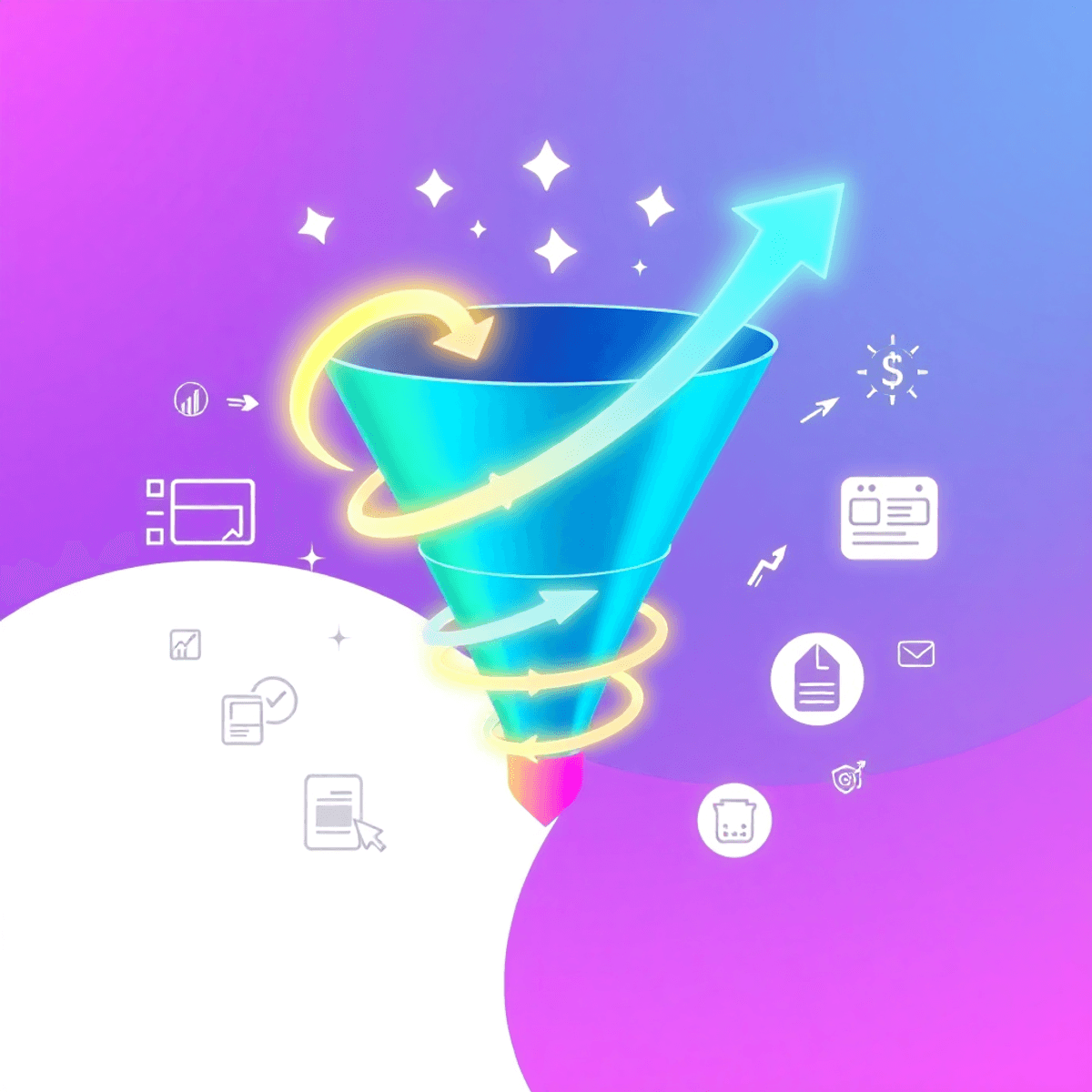
Ads funnels are planned marketing paths designed to move people from initial awareness to genuine interest, and ultimately, to a purchase. The goal is to make casual visitors feel increasingly involved, guiding them toward a final conversion. These funnels utilize targeted ads, strategic website design, and a seamless user experience to maximize conversions, control cost-per-click (CPC), and support the overall campaign. Mastering this process is foundational to understanding your overall video virality score and digital marketing success.
In digital marketing, ads funnels are critical for several reasons:
- Lead Generation: Funnels attract prospects by offering tailored incentives, such as AI prompt packs or niche-specific digital products.
- Customer Acquisition: Funnels convert interest into sales using optimized landing pages, tripwire offers, and automated follow-up email sequences.
- Search Engine Optimization (SEO): Integrating SEO into your funnel structure drives organic traffic, complementing paid ad efforts and reducing overall acquisition costs.
- Data-Driven Improvement: Funnels track precise metrics, allowing for continuous, iterative optimization based on real user behavior.
Using ads funnels effectively requires aligning your web design and site structure with your advertising goals. This creates a frictionless experience that captures attention, sustains interest, and drives conversions—essential for businesses aiming to grow in competitive online markets.
📑 Table of Contents
- 1. Understanding the Marketing Funnel and Its Stages
- 2. Designing Effective Website Funnels for CRO
- 3. Leveraging SEO to Enhance Ads Funnel Performance
- 4. Creating Lead Magnets and Tripwire Offers
- 5. Utilizing Social Media Ads to Drive Traffic
- 6. Implementing AI Tools to Automate Funnel Processes
- 7. Case Study Insights: E-commerce & Supplement Niches
- 8. Tracking Performance Metrics and Optimizing Continuously
- 9. Integrating Email Marketing Within Ads Funnels
- 10. Building a Digital Marketing Ecosystem
- 11. Conclusion
- 12. FAQs
Understanding the Marketing Funnel and Its Stages
The marketing funnel (or sales funnel) maps the customer journey into distinct stages, helping businesses guide prospects from initial awareness to a final purchasing decision.
Three Main Stages of the Marketing Funnel
1. Top of the Funnel (Awareness)
This is the first step, where users discover your brand or product.
The goal is to capture attention through ads, social media, SEO, and content marketing. Users at this stage are often unaware of your specific solution and are searching for answers to their problems.
Example: A user searching for “how to improve Amazon listing conversion” discovers your blog post or Instagram ad.
2. Middle of the Funnel (Consideration)
At this stage, prospects evaluate their options seriously. They compare features, read reviews, and seek detailed information to solve their specific problems.
Your content here should educate and assist by providing case studies, testimonials, lead magnets, or free trials.
For instance, offering an AI prompt pack as a lead magnet targets those actively exploring tools to boost their e-commerce sales.
3. Bottom of the Funnel (Decision)
Users are ready to make a purchase decision.
The focus shifts to converting leads into customers using targeted calls-to-action, such as tripwire offers or exclusive discounts.
Address final objections and reinforce the value of your offer with social proof or money-back guarantees.
Example: Presenting a $27 upsell immediately after opt-in encourages commitment while minimizing perceived risk.
Targeting Different User Behaviors and Pain Points
Each funnel stage aligns with a specific user mindset:
- Awareness: Curious about solutions but not ready to commit.
- Consideration: Evaluating options and seeking validation.
- Decision: Looking for clear benefits and immediate trust signals.
Marketing messages must align with each stage to deliver the right information at the exact moment the user needs it. Optimizing for search ensures a steady flow of top-of-funnel traffic, which fuels the entire conversion process.
Designing Effective Website Funnels for Conversion Rate Optimization (CRO)
Website funnels convert visitors into customers or leads by guiding them through a clear, frictionless path toward a desired action.
Key Components of High-Converting Website Funnels
1. Landing Pages
Landing pages are the entry point to your funnel. To maximize conversion rates, they must be clear, focused, and free of distractions. Use strong, benefit-driven headlines that speak directly to your target audience's needs.
2. Calls-to-Action (CTAs)
Every landing page needs a prominent, easy-to-click CTA. Phrases like “Download Now,” “Get Your Free Trial,” or “Shop the Collection” work best. Button placement and contrasting colors significantly impact click-through rates.
3. Unique Selling Proposition (USP)
Clearly articulate what makes your offer superior to competitors. A strong USP eliminates doubt and reassures prospects they are making the right choice.
4. Social Proof and Trust Signals
Testimonials, reviews, certifications, and client logos build credibility. Seeing proof of others' success lowers the perceived risk of purchasing.
Using Google Analytics to Track User Behavior
Tracking user behavior is essential for CRO. Google Analytics provides deep insights into funnel performance:
- Behavior Flow Reports: Visualize the paths users take, highlighting where they drop off.
- Conversion Goals: Set specific targets (e.g., form submissions, purchases) and monitor completion rates.
- Bounce Rate Analysis: A high bounce rate on a landing page indicates a mismatch between the ad promise and the page content, signaling a need for design or messaging adjustments. Conducting a retention decay audit can help pinpoint these friction points.
- User Segmentation: Group visitors by demographics, traffic source, or device to tailor the funnel experience for each segment.
Optimizing Funnels Based on Data
Data-driven decisions eliminate guesswork. To optimize:
- Identify high-drop-off points in the funnel.
- Run A/B tests on headlines, images, and CTAs.
- Adjust content length and complexity based on user engagement metrics.
Leveraging SEO to Enhance Ads Funnel Performance
SEO drives organic search traffic into your ads funnel, creating a powerful synergy with paid advertising. While paid ads rely on budget, SEO provides a sustainable, long-term stream of high-intent visitors.
How SEO Supports Paid Ads Funnels
1. Increases Top-of-Funnel Traffic
Organic search captures users actively seeking solutions, feeding highly qualified prospects into the top of your funnel.
2. Lowers Customer Acquisition Cost (CAC)
Blending free organic traffic with paid traffic reduces reliance on expensive clicks, lowering your overall CAC.
3. Builds Long-Term Authority
High-quality content and backlinks establish brand trust, making users more receptive to your paid ads further down the funnel.
4. Improves Landing Page Quality Scores
SEO-optimized pages that load quickly and feature relevant keywords achieve higher Quality Scores in Google Ads, resulting in lower CPCs and better ad placements.
Best SEO Practices That Complement Advertising
1. Keyword Alignment Across Channels
- Use keyword research to identify high-intent search terms.
- Embed these keywords naturally into landing page copy, meta tags, and supporting blog posts.
- Ensure ad copy matches the search intent for a seamless user journey.
2. Optimized Web Structure
- Ensure intuitive site navigation and logical internal linking.
- Use clean, descriptive URLs for landing pages.
- Implement schema markup to enhance search result appearances.
3. Mobile-Friendly Design
- Ensure responsive design for fast loading and easy use on mobile devices, aligning with Google's mobile-first indexing.
4. Content Quality Focus
- Create helpful guides addressing pain points at every funnel stage.
- High-quality content increases dwell time and reduces bounce rates, both positive ranking signals.
5. Page Speed Optimization
- Compress images, leverage browser caching, and minimize code bloat to improve user experience and conversion rates.
Creating Lead Magnets and Tripwire Offers to Capture Qualified Leads
Lead generation is most effective when targeting qualified leads who have a genuine need for your solution. Lead magnets facilitate this by offering immediate value in exchange for contact information.
How AI Prompt Packs Can Be Effective Lead Magnets
For example, AI prompt packs serve as excellent lead magnets. They provide immediate, actionable value for platforms like TikTok or Amazon PPC, establishing your brand as an authority while capturing highly engaged leads.
The Role of Tripwire Offers in Converting Leads
Beyond lead magnets, tripwire offers are a strategic tool for converting leads into paying customers. A tripwire is a low-cost product presented immediately after opt-in, designed to overcome purchase hesitation. For example, a $27 upsell for a launch playbook or advanced prompts can significantly increase revenue while keeping the barrier to entry low.
Key Benefits of Tripwire Offers
- Lowers the psychological barrier for a first-time purchase.
- Builds trust by delivering immediate, high-perceived value.
- Identifies which leads are ready to invest, allowing for better segmentation.
Utilizing Social Media Ads to Drive Traffic into Funnels
Platforms like Instagram and TikTok are powerful channels for funnel traffic, especially for e-commerce. They allow brands to reach new audiences with engaging, visually compelling content.
Effective Platforms for E-commerce Advertising
- Instagram Ads: Utilize high-quality images, Stories, and Reels. Integration with Facebook Ads Manager allows for precise demographic and interest-based targeting.
- TikTok Ads: Leverage short-form, authentic video content. TikTok's algorithm favors creative, native-looking ads, which often yield higher engagement rates.
Targeting Strategies Using Platform-Specific Ad Managers
Precise targeting is essential. Segment your audience using:
- Demographics: Age, gender, location, language.
- Interests & Behaviors: Shopping habits, content interaction patterns.
- Custom Audiences: Retarget website visitors or past leads.
- Lookalike Audiences: Reach new users who share characteristics with your best customers.
Leveraging Social Proof in Ads
Incorporating user-generated content (UGC) or customer reviews into your ads enhances authenticity and trust, driving higher click-through rates.
Implementing AI Tools to Automate Funnel Processes and Content Creation
Artificial intelligence is revolutionizing how ads funnels are built and managed, offering automation that speeds up workflows and enhances creativity. In e-commerce, AI automation supports a full-funnel approach, from initial SEO planning to advanced web design optimization.
Use Cases of AI in Creating Ad Creatives
1. Image Generation
AI tools can generate high-quality e-commerce product photos for listings or social media ads, allowing for rapid, layer-based edits without costly photoshoots.
2. Video Content
AI-powered platforms excel at producing short-form video ads optimized for Instagram and TikTok, reducing production time while maintaining brand consistency.
3. Copywriting Assistance
AI models can generate ad copy, headlines, and email sequences, ensuring the messaging is perfectly tailored to your target audience at every funnel stage.
Benefits of AI in Scaling E-commerce Brand Marketing
1. Efficiency Gains
Automation handles repetitive tasks like content generation, A/B testing, and audience segmentation, freeing up time for strategic planning.
2. Consistent Quality
AI helps maintain a uniform brand voice and visual identity across all platforms, reinforcing brand recognition.
3. Data-Driven Optimization
AI analyzes funnel performance in real-time, providing actionable insights to boost sign-ups or sales faster than manual methods.
4. Cost-Effective Scaling
By automating creative production and funnel management, brands can scale their reach without proportionally increasing labor costs.
Case Study Insights: Applying Ads Funnels in E-commerce & Supplement Niches
Running ads funnels for regulated niches like supplements on Amazon presents unique challenges, including strict advertising policies and high competition. A well-structured funnel is critical for overcoming these hurdles.
Key challenges faced include:
- Navigating strict platform rules regarding supplement claims and imagery.
- Building trust in a skeptical, highly regulated market.
- Balancing customer acquisition costs with typically thin profit margins.
- Differentiating from competitors through superior customer journeys.
Successful strategies include:
- Applying a 3-second rule on landing pages to communicate the USP instantly, reducing bounce rates.
- Utilizing premium A+ content with high-quality images and videos to build trust.
- Strategically placing reviews and social proof to address common buyer objections.
- Implementing compliant upsells and tripwires post-opt-in to maximize order value.
In one case study, a supplement brand with high traffic but low conversions revamped its funnel to highlight its USP, added authentic customer testimonials, and aligned CTAs with user behavior analytics. This resulted in a 25% increase in conversions. Another example involved Amazon sellers using custom, AI-generated, compliant ads in retargeting campaigns, significantly lowering their CAC.
Tracking Performance Metrics and Optimizing Funnels Continuously
Monitoring the right metrics is essential for funnel optimization. Key indicators include:
- Conversion Rate: The percentage of visitors who complete a desired action. Benchmark against industry standards and aim to exceed them.
- Average Order Value (AOV): The average amount spent per transaction. Increasing AOV grows revenue without needing additional traffic.
- Cost Per Acquisition (CPA): The total ad spend required to acquire one paying customer. A lower CPA indicates efficient budget utilization.
Tools like Google Analytics provide detailed tracking to identify drop-off points. A powerful optimization method is A/B testing, where you compare two versions of a funnel element to determine which performs better. Common elements to test include:
- Landing page headlines
- Call-to-action button text and color
- Upsell and tripwire offers
- Ad images and video creatives
- Email subject lines
Testing one variable at a time isolates its impact on your conversion rate, allowing for steady, measurable improvements.
Integrating Email Marketing Within Ads Funnels for Nurturing Leads
Email marketing is a critical component of ads funnels, particularly post-opt-in. It allows for direct, personalized communication to educate, build trust, and guide leads toward a purchase.
Designing Effective Email Sequences
Effective email sequences should:
- Reinforce the benefits of your product or service.
- Address common objections or pain points.
- Share success stories and customer testimonials.
- Provide exclusive tips or resources related to their initial interest.
The Importance of Segmenting Email Lists
Segmentation ensures message relevance. Leads are at different stages of the buyer's journey. By segmenting your list, you deliver the right content to the right person at the right time.
Example Segmentation Strategies
- Awareness stage: Educational tips and brand value propositions.
- Consideration stage: Product comparisons, FAQs, and short demo videos.
- Decision stage: Exclusive discounts, limited-time offers, or bundle deals.
Leveraging Automation for Consistent Communication
Using automation tools to trigger these email flows immediately after sign-up ensures consistent, timely communication without manual effort, significantly boosting funnel efficiency.
Building a Digital Marketing Ecosystem Around Your Ads Funnel Strategy
A digital marketing ecosystem integrates multiple channels to work cohesively. Your ads will perform exponentially better when supported by a holistic strategy that blends paid and organic efforts.
Key components of a strong digital marketing ecosystem include:
- Harmonizing Content and Paid Ads: Ensure messaging, branding, and offers are consistent across blog posts, videos, social media, and ads.
- Leveraging YouTube for Organic Reach: Create helpful how-to videos or customer stories. Organic YouTube traffic builds trust, making users more receptive to your paid ads later.
- Multi-channel Engagement: Meet your audience where they spend their time, using Instagram, TikTok, email, and YouTube in concert.
- Supporting Funnel Stages with Varied Formats: Use short videos for awareness, detailed blog posts for consideration, and retargeting ads for decision-making.
Conclusion
Experimenting with different funnel models is essential to discover what resonates best with your audience. Implementing structured ads funnels within your web design and site architecture drives sales by addressing customer needs at every journey stage. Continuously test your lead magnets, tripwire offers, and ad creatives.
Look beyond surface-level numbers. While metrics like conversion rate, CPA, and AOV are vital, prioritize the overall customer experience. A truly optimized funnel understands and improves how customers feel at every touchpoint, from initial discovery through post-purchase.
View customer testimonials as valuable feedback loops. Their insights can refine your funnel, creating a seamless path from awareness to decision. As you refine your strategy, you will help your digital marketing grow and drive sustainable, long-term action.
“A well-optimized ads funnel transforms casual visitors into loyal customers by aligning marketing efforts with real customer needs.”
About the Author
The Video Virality Score Team consists of digital marketing experts, conversion rate optimization specialists, and data analysts dedicated to decoding what makes content convert. With years of experience analyzing millions of data points across video marketing campaigns and sales funnels, we provide actionable, data-driven insights to help creators and brands maximize their reach and revenue. Reviewed for factual accuracy and alignment with 2026 marketing best practices.
FAQs (Frequently Asked Questions)
What are ads funnels and why are they important in digital marketing?
Ads funnels are planned marketing paths that guide people from first hearing about a business to making a purchase. They are crucial in digital marketing because they help businesses reach potential customers, nurture their interest, and systematically convert them into buyers while allowing marketers to track and optimize each step of the journey.
How do the stages of the marketing funnel influence customer acquisition strategies?
The marketing funnel has three main stages: Awareness (top), Consideration (middle), and Decision (bottom). Each stage addresses different user needs. The top builds brand awareness, the middle provides educational content to build interest, and the bottom uses targeted offers to drive the final purchase decision, allowing marketers to tailor their acquisition strategies accordingly.
How can website funnels be designed to optimize conversion rates?
Effective website funnels feature clear, distraction-free landing pages, prominent calls-to-action (CTAs), a strong unique selling proposition (USP), and social proof. Using analytics tools to track user behavior allows for continuous A/B testing and optimization, ensuring the funnel aligns with visitor expectations and maximizes conversions.
In what ways does SEO enhance the performance of ads funnels?
SEO enhances ads funnels by driving consistent, free organic traffic to the top of the funnel, which lowers overall customer acquisition costs (CAC). Additionally, SEO-optimized landing pages often achieve higher Quality Scores in paid ad platforms, leading to lower cost-per-click (CPC) and better ad placements.
What role do lead magnets and tripwire offers play in capturing qualified leads?
Lead magnets (like free eBooks or AI prompt packs) capture contact information by providing immediate value. Tripwire offers are low-cost products presented immediately after opt-in, designed to convert new leads into first-time paying customers with minimal friction, thereby accelerating the journey through the sales funnel.
How can AI tools be utilized to automate ads funnel processes and content creation?
AI tools can automate ad creative generation (images and videos), assist with copywriting for emails and landing pages, and analyze funnel performance data. This automation speeds up content creation, ensures brand consistency, and enables data-driven optimization at scale with less manual effort.
Comments
Post a Comment