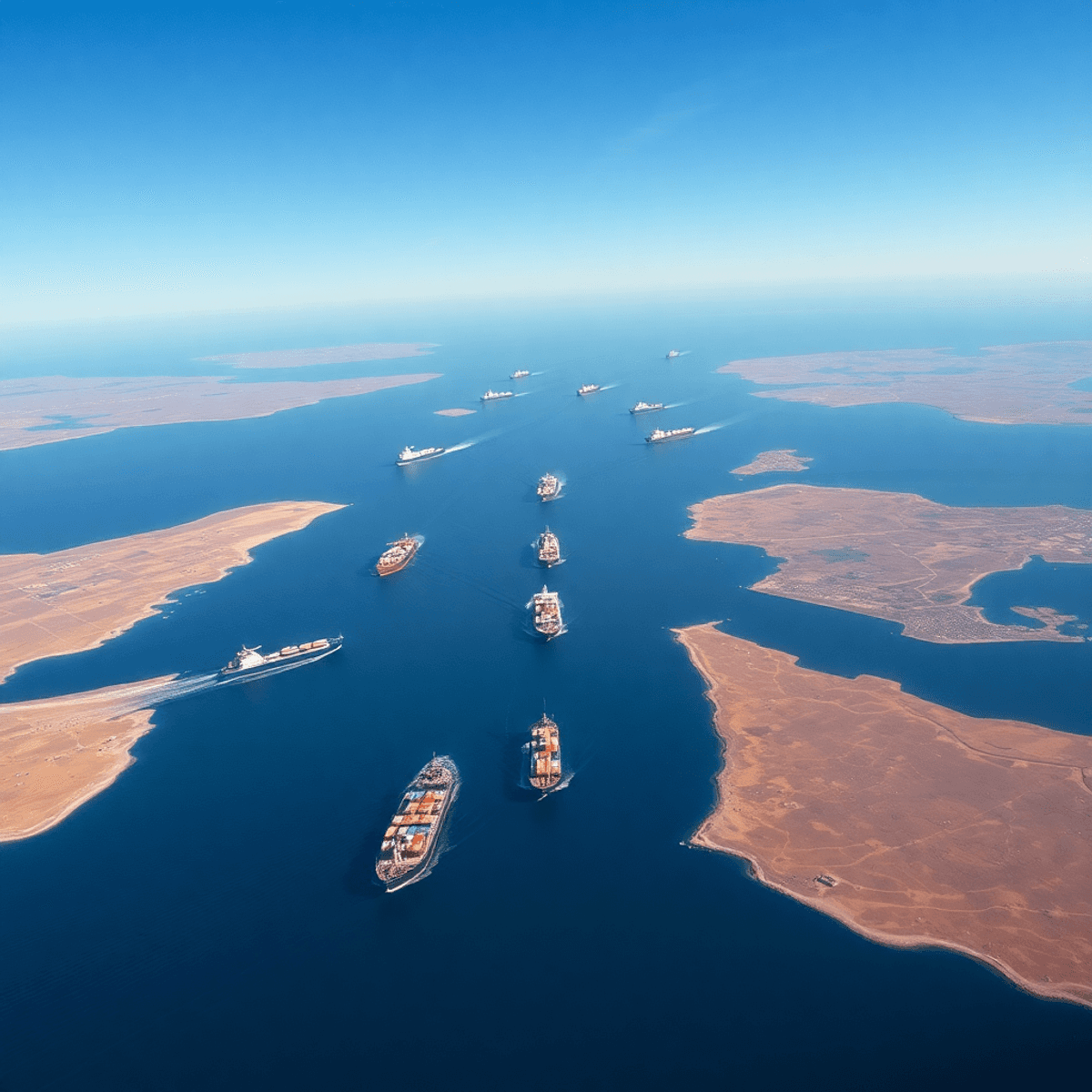
The Strait of Hormuz is one of the most important maritime chokepoints in the world. This narrow waterway connects the Persian Gulf to the Gulf of Oman and is crucial for transporting energy globally. The significance of this strait is highlighted by the large quantities of oil and liquefied natural gas (LNG) that pass through it every day.
Key Facts About the Strait of Hormuz
- Approximately 20 million barrels of oil transit the strait each day.
- This accounts for roughly 25% of the world's seaborne oil trade.
- The strait also handles around 20% of global LNG shipments.
In early 2026, a major geopolitical crisis known as the Strait of Hormuz crisis occurred. Iranian military actions, such as deploying sea mines and attacking merchant vessels, effectively closed this critical passage. As a result, global energy markets were greatly affected, with oil prices skyrocketing and widespread worries about supply stability.
Videos showing naval confrontations and tanker blockades quickly went viral on social media platforms, sparking public interest in the situation. This crisis could have been turned into a unique ad campaign to raise awareness and generate discussions about the issue. Such a campaign would require careful planning, similar to what is described in this step-by-step guide to creating viral video ad campaigns.
The crisis became a popular topic on TikTok viral feeds, Telegram viral channels, and YouTube video viral compilations, demonstrating how modern information spreads can amplify awareness of global events.
This article explores why the Strait of Hormuz is so significant for global oil transportation, analyzes the factors that led to the 2026 crisis, and discusses its wide-ranging impacts on international energy security.
The Strategic Importance of the Strait of Hormuz
The Strait of Hormuz is one of the most important maritime chokepoints for global oil transport. It connects the Persian Gulf—the world’s largest hydrocarbon-producing region—to the open ocean, serving as a narrow but vital passage for energy shipments. This strait measures approximately 34 kilometers (21 miles) at its narrowest point, making it strategically vulnerable.
Volume of Global Oil Transport
Here are some key facts about the volume of global oil transport through the Strait of Hormuz:
- Roughly 20 million barrels of oil per day transit through the strait.
- This accounts for about 25% of the world’s seaborne oil trade, highlighting its indispensable role in global energy supply chains.
- The strait is not only essential for crude oil but also for refined petroleum products, amplifying its significance.
Role in LNG and Fertilizer Trade
The Strait of Hormuz also plays a crucial role in the trade of liquefied natural gas (LNG) and fertilizers:
- Beyond oil, around 20% of global LNG exports pass through the strait.
- Key LNG exporters such as Qatar depend heavily on this route to reach international markets.
- Fertilizer shipments, particularly those derived from natural gas feedstocks like ammonia and urea, make up to 30% of internationally traded fertilizers transiting the strait.
- Disruptions here ripple outwards, affecting agricultural sectors worldwide because fertilizer supply chains are tightly linked to these maritime routes.
Countries Dependent on the Strait
Several key nations rely on the Strait of Hormuz for their economies and energy security:
- Saudi Arabia: The world's leading oil exporter relies on this route for nearly all its seaborne exports.
- United Arab Emirates (UAE): Energy exports by sea are funneled almost exclusively through this passage.
- Iraq: A significant portion of Iraqi crude oil exports depends on access through the strait.
- Qatar: As a top LNG exporter, Qatar’s energy revenues are highly sensitive to any disruption here.
- China: Approximately one-third of China’s imported oil arrives via this chokepoint, making it critically dependent on uninterrupted transit.
The strategic geography combined with immense volumes shapes the Strait of Hormuz into a linchpin for global energy and commodity flows.
The interconnectedness established by this corridor means any disturbance affects not just energy markets but also industries reliant on fertilizers and LNG — feeding into broader economic systems. Such complexity underscores why controlling or threatening access to the Strait of Hormuz triggers immediate concern across governments and investors worldwide.
Anatomy of the 2026 Strait of Hormuz Crisis
The Iran war 2026 ignited on February 28, marking a sharp escalation in tensions that directly impacted maritime security in one of the world’s most crucial oil chokepoints. Iranian forces, primarily the Islamic Revolutionary Guard Corps (IRGC), executed a strategic blockade of the Strait of Hormuz that disrupted global energy transport and challenged international maritime norms.
Key Actions by Iranian Forces
- Deployment of sea mines: The IRGC strategically laid naval mines across navigable channels within the strait, severely limiting safe passage for commercial vessels. These mines presented constant danger to tankers and cargo ships, forcing many to halt or reroute.
- Targeted attacks on merchant shipping: Iranian forces launched missile strikes and drone attacks against tanker fleets transiting the strait. Several vessels suffered damage or were forced to suspend operations, amplifying supply chain disruptions.
- Control over vessel passage: Beyond military actions, Iran asserted control over which ships could pass, demanding tolls and inspection rights, an act that violated customary freedom of navigation under international maritime law.
Impact on Tanker Traffic Volume
The blockade caused a dramatic plunge in tanker transit:
- Tanker traffic volume through the strait dropped by approximately 70%, with some routes experiencing zero throughput for extended periods.
- Approximately 2,000 ships and nearly 20,000 mariners found themselves immobilized in the Persian Gulf region due to heightened risk and restricted movement.
- Shipping delays cascaded into longer-term logistical challenges affecting global crude oil supply chains.
Violations of International Maritime Law
Iran’s blockade breached provisions under the United Nations Convention on the Law of the Sea (UNCLOS), which guarantees freedom of navigation through international straits like Hormuz. These violations complicated diplomatic efforts to resolve the crisis and raised concerns about precedent-setting actions in contested waters.
Viral Media Impact
The crisis quickly gained traction on social media platforms:
- Videos showing damaged tankers and mine clearances went viral as TikTok videos, Instagram reels, and YouTube clips spread awareness far beyond traditional news outlets.
- These viral video marketing moments fueled public understanding but also amplified geopolitical tensions by showcasing real-time impacts.
- Hashtags related to maritime security crisis, IRGC blockade, and tanker traffic disruption trended globally, illustrating how digital media shapes perceptions during conflicts.
This chapter in maritime history underscored both physical vulnerabilities at critical chokepoints and the evolving role of viral digital content in framing global crises.
Geopolitical Triggers and Escalations Leading to the Crisis
The 2026 Strait of Hormuz crisis escalated rapidly following a series of decisive and provocative actions that destabilized an already tense region. Central to the outbreak was a coordinated US-Israel air campaign targeting Iranian military infrastructure and strategic assets. This campaign aimed to degrade Iran’s missile capabilities, drone operations, and command centers tied to the Islamic Revolutionary Guard Corps (IRGC).
Key Events Leading to the Crisis
Several key events contributed to the escalation of tensions and ultimately led to the crisis:
- Assassination of Iran’s Supreme Leader: In a highly significant and unprecedented move, the assassination of Iran’s Supreme Leader, Ali Khamenei, occurred during this period. This event dramatically intensified hostilities. The killing was attributed to covert operations linked to the same coalition behind the air strikes. The removal of such a central figure in Iranian politics created a power vacuum and fueled heightened anti-Western sentiment across Tehran’s leadership.
- Iran’s Retaliatory Actions: Iran responded swiftly with a series of retaliatory missile and drone attacks directed at key US military bases in Iraq and Syria. These strikes demonstrated Iran’s capability to project force beyond its borders and signaled intent to escalate conflict if pressured further. Simultaneously, Iran launched attacks on Israeli urban centers using drones and precision-guided missiles, marking an escalation beyond proxy engagements that had previously dominated Iran-Israel hostilities.
Impact on Global Energy Supplies
These military actions took place around the Strait of Hormuz—a chokepoint connecting the Persian Gulf to the open ocean—through which approximately one-quarter of global seaborne oil trade passes daily. The strait's closure or disruption would have immediate ramifications for global energy supplies due to its role as a critical artery for oil and liquefied natural gas exports.
Iran’s aggressive posture included deploying sea mines near shipping lanes within this narrow corridor, threatening commercial vessels attempting passage. This tactic aimed not only at disrupting global oil transport but also at asserting control over a vital maritime junction critical for international trade. The combination of direct attacks on shipping, increased naval presence, and threats against freedom of navigation underscored Tehran’s willingness to leverage this chokepoint as a strategic tool.
Lessons Learned from Geopolitical Flashpoints
The rapid escalation revealed how geopolitical flashpoints involving regional powers and their allies can transform energy transit routes into contested zones with global consequences. The intertwined nature of military actions—air campaigns, assassination, missile barrages—and economic chokepoints created an unprecedented crisis scenario requiring robust international response mechanisms.
Dual Blockade Scenario: Responses from Global Powers
The US responded swiftly to the disruption caused by Iranian forces in the Strait of Hormuz by imposing a naval blockade on Iranian ports starting April 13, 2026. This move aimed to restrict Iran's ability to export oil and military supplies, applying pressure to end the strait blockade. The US naval presence increased significantly in the region, deploying aircraft carriers, destroyers, and support vessels to enforce the blockade and protect allied shipping.
Background of the Situation
Iran’s earlier actions—mining the strait and attacking merchant vessels—had effectively created a blockade of outbound tanker traffic, halting about 70% of normal shipping volume. In response, the US implemented its own naval blockade targeting Iranian ports, resulting in a dual blockade situation where both sides restricted maritime movement:
- Iran’s blockade: Focused on preventing oil exports through the Strait of Hormuz by foreign tankers.
- US blockade: Aimed at stopping Iranian oil exports and restricting Iran’s maritime commerce.
This simultaneous restriction on both ends of the Persian Gulf intensified tensions and complicated navigation for commercial shipping. The dual blockade disrupted major global shipping lanes that funnel energy resources from the Middle East to markets worldwide.
Consequences of this scenario included:
- Severe congestion in alternative routes: Shipping companies scrambled to reroute vessels around longer paths such as via the Cape of Good Hope or overland pipelines, increasing transit times and costs.
- Heightened risk for merchant ships: With conflicting blockades, vessels faced danger from military engagements, minefields, and stricter inspections at ports.
- Escalation in maritime security measures: Navies from other powers, including allies of the US and neutral countries, increased patrols to safeguard shipping lanes outside direct conflict zones.
- Impact on insurance rates: Insurers raised premiums substantially for voyages near Persian Gulf waters due to elevated risks posed by dual blockades.
The dual blockade thus represented a complex standoff at sea with broad implications for freedom of navigation under international maritime law. It underscored how quickly geopolitical conflicts can extend into economic warfare by controlling critical chokepoints like the Strait of Hormuz.
Countries heavily reliant on uninterrupted oil shipments faced supply uncertainties amid this standoff. The strategic calculus for global powers involved balancing enforcement of sanctions against escalation risks while attempting to maintain critical energy flows.
Economic Consequences of the Strait Closure
The closure of the Strait of Hormuz in 2026 triggered a sharp increase in global oil prices, marking one of the most significant supply disruptions in recent decades. The immediate effect was a spike in Brent crude prices, which surged past $100 per barrel by early March — a level not seen since the energy crisis of the 1970s. This price surge directly reflected concerns over the stability of global oil and LNG transport, given that approximately 25% of seaborne oil and 20% of liquefied natural gas movements depend on this narrow maritime corridor.
Several factors intensified the economic impact:
- Supply Constraints: With tanker traffic through the strait reduced by nearly 70%, physical oil exports from key producers like Saudi Arabia, UAE, Iraq, and Qatar faced serious bottlenecks. This disruption tightened global supply availability almost overnight.
- Market Volatility: Energy traders reacted quickly to uncertainty around route security, driving speculative price increases and heightened market volatility. This added upward pressure on oil benchmarks globally.
- Inflationary Pressures: Higher energy and commodity prices fed into inflation globally, impacting transportation costs, manufacturing inputs, and consumer goods pricing. Developing economies dependent on imports saw exacerbated financial strain.
- Energy Security Concerns: Countries heavily reliant on imports passing through the strait scrambled to diversify sources or stockpile reserves. These actions further tightened demand dynamics in global markets.
Broader Commodity Ripple Effects
The interconnected nature of supply chains meant effects extended beyond crude oil:
- Aluminum prices rose due to increased costs for shipping raw materials and energy inputs.
- Fertilizer markets faced strain as up to 30% of internationally traded fertilizers transit through the region, compounding agricultural cost pressures worldwide.
- Helium supplies were disrupted, affecting industries reliant on this rare gas for medical technology and manufacturing.
The oil price surge in 2026 underscored how vulnerable global energy systems are to chokepoint disruptions. Despite advances in alternative energy sources, the world remains heavily tied to strategic passages like Hormuz for daily fuel needs. Supply shocks like this reverberate across multiple sectors, revealing the complex dependencies within modern global trade networks. Such disruptions also prompt significant shifts in trade patterns as countries seek to mitigate risks associated with over-reliance on certain routes or suppliers.
Impact on Maritime Shipping and Insurance Industry
The 2026 Strait of Hormuz crisis severely disrupted commercial shipping operations across one of the world's busiest maritime corridors. Key impacts include:
1. Commercial shipping suspension
Numerous shipping companies halted vessel transits through the strait and adjacent Persian Gulf waters due to heightened security risks. This suspension affected not only oil tankers but also container ships and bulk carriers transporting vital commodities such as fertilizers and raw materials. Ports within the region faced congestion as inbound and outbound traffic stalled.
2. Stranding of maritime personnel
Approximately 20,000 mariners aboard roughly 2,000 vessels found themselves immobilized in port or at anchor, unable to proceed safely through or around the chokepoint. Crew rotations and resupply logistics became major operational challenges, further complicating shipping schedules.
3. Surge in insurance premiums
Insurance underwriters responded swiftly to increased geopolitical risks by sharply raising premiums for vessels navigating near the Strait of Hormuz and adjacent conflict zones. War risk surcharges often doubled or tripled baseline costs, significantly increasing operational expenses for shipping operators.
4. Impact on global oil transport costs
The spike in insurance fees combined with rerouting efforts—such as longer voyages circumventing the Arabian Peninsula—pushed up the cost of transporting crude oil internationally. These elevated transportation expenses contributed directly to higher fuel prices worldwide.
5. Heightened risk management protocols
Shipowners implemented stricter security measures including armed guards aboard certain vessels, enhanced communication with naval escorts, and real-time route monitoring technologies to mitigate threats from mines, drones, and missile attacks reported during the crisis.
6. Ripple effects on maritime insurance markets
Insurers reassessed exposure in other politically sensitive regions after witnessing the rapid escalation in risk profiles caused by localized conflicts like this one. This recalibration led to a broader tightening of terms for war-risk coverage globally.
The suspension of commercial shipping activity coupled with soaring insurance costs underscored how geopolitical instability in narrow maritime passages can cascade into significant disruptions for global supply chains. The Strait of Hormuz remains critical not only for energy flows but also for maintaining robust international trade networks dependent on secure shipping lanes.
Temporary Ceasefire and Controlled Reopening of the Strait
The ceasefire in April 2026 was a significant turning point for the Strait of Hormuz, which was facing increasing tensions and widespread disruption. The agreement set specific rules to partially restore maritime traffic while still allowing Iran to maintain control. Here are the main points of this ceasefire:
- Controlled passage: Iran had the power to decide how vessels moved through the strait. Ships had to get permission beforehand and undergo inspections.
- Tolls imposed: Each ship had to pay transit fees of over $1 million, which many saw as a way for Iran to exert economic influence.
- Limited scope: The reopening didn't mean that ships could freely navigate but rather established a controlled route that balanced security concerns with commercial needs.
During this time, diplomatic efforts were crucial in determining access rights. Countries that had strong strategic or economic relationships with Iran negotiated guarantees for their vessels. The following nations were granted controlled transit:
- China: Ensured its ongoing oil imports, which are vital for its energy requirements.
- Russia: Sustained supply routes necessary for its regional power and trade interests.
- India: Safeguarded its dependence on Gulf oil and gas during fluctuations in the global market.
- Iraq, Pakistan, Malaysia, Thailand: Each country received concessions based on their geopolitical positions and bilateral ties with Tehran.
This selective reopening highlighted the intricate relationship between diplomacy and military power in managing critical chokepoints during times of conflict. The ceasefire's structure allowed some trade activities to resume while still giving Iran control over this important maritime route. For more insight into the legal aspects surrounding shipping in this region during such tumultuous times, refer to this comprehensive analysis on Strait of Hormuz shipping and law.
Broader Implications for Global Energy Security and Supply Chains
The 2026 Strait of Hormuz crisis exposed fundamental vulnerabilities of maritime chokepoints under intense geopolitical tensions. This narrow corridor, essential for a quarter of the world's seaborne oil and a significant share of LNG and fertilizer shipments, revealed how quickly global energy security can be undermined when access is restricted or weaponized. The incident underscored the precariousness of relying heavily on limited maritime routes for critical energy supplies.
Several lessons stand out:
- Concentration risk in critical transport nodes: The Strait's dimensions and geopolitical location make it impossible to bypass easily without significant detours through longer maritime routes, which escalate costs and transit times. This concentration amplifies the impact of any disruption.
- Geopolitical flashpoints as systemic risk triggers: Conflicts involving regional powers with global reach, such as Iran, have ripple effects that extend beyond local hostilities. Energy markets globally are directly affected by localized disruptions in chokepoints like Hormuz.
- Interconnected supply chain fragility: The crisis did not just affect oil prices but also reverberated through commodities like aluminum, fertilizer, and helium. These products depend on stable energy inputs and uninterrupted shipping lanes, illustrating how energy security is deeply intertwined with broader industrial supply chains.
- Economic vulnerability of developing nations: Many developing countries rely heavily on imports of fuel and fertilizers transported through the Strait. The sudden spike in energy costs translated into soaring food prices and strained public finances. Food inflation often hits vulnerable populations hardest, exacerbating socio-economic challenges.
- Global market volatility: Price shocks from chokepoint disruptions can trigger speculative trading and uncertainty in financial markets. The 2026 crisis triggered one of the largest surges in Brent crude prices since the 1970s, demonstrating how fragile market stability is in the face of physical supply interruptions.
- Necessity for diversified supply routes and sources: The crisis emphasized the strategic importance for consumers and producers to diversify oil and gas import routes where possible—via pipelines, alternative maritime corridors, or increased domestic production—to mitigate risks associated with single chokepoints.
“Energy security today cannot be separated from geopolitical dynamics at strategic maritime passages.”
The implications extend into policy realms where international cooperation becomes essential to safeguard freedom of navigation and uphold international maritime law. Energy-importing nations must understand that securing stable access to resources depends not just on market mechanisms but also on diplomatic engagement and conflict prevention around vital chokepoints like the Strait of Hormuz.
This event reshaped perspectives on how intertwined global energy markets are with political stability in key regions. It pushed governments, industry stakeholders, and insurers to rethink risk assessments for maritime transport corridors under stress from geopolitical rivalries.
Strategies for Risk Mitigation and Future Outlook
Protecting maritime transport infrastructure is crucial for maintaining stability in global oil transport. The crisis in the Strait of Hormuz highlighted the vulnerability of important sea routes and the need for proactive measures to prevent similar disruptions.
Key strategies include:
- Enhanced Naval Patrols and Multinational Cooperation: Increasing joint naval exercises among countries dependent on world oil transport reinforces security presence. This deters hostile actions and provides rapid response capabilities to emerging threats within strategic chokepoints.
- Investment in Alternative Routes and Infrastructure: Diversifying supply chains by developing pipelines, such as those bypassing the Strait of Hormuz, reduces overreliance on a single maritime corridor. Expanded port facilities and transshipment hubs outside high-risk zones help maintain continuity in trade flows during crises.
- Advanced Surveillance and Early Warning Systems: Deploying cutting-edge sonar, satellite monitoring, and unmanned vehicles improves detection of threats like sea mines or unauthorized vessels. Real-time intelligence sharing between nations enhances decision-making speed, preventing escalation.
- Diplomatic Engagement Focused on Conflict De-escalation: Sustained dialogue addressing underlying political tensions serves as a foundation for long-term stability. Confidence-building measures between regional actors reduce incentives for blockade tactics or aggressive maneuvers impacting global oil transport.
Adherence to international maritime law is equally critical. The UN Convention on the Law of the Sea (UNCLOS) establishes legal frameworks safeguarding freedom of navigation in international waters. Respecting these laws:
- Ensures uninterrupted movement through strategic passages vital for the world's energy security.
- Provides mechanisms to resolve disputes without resorting to force.
- Facilitates diplomatic negotiations over contested maritime boundaries or transit rights.
Enforcement requires cooperation from all stakeholders—coastal states, flag states, and international organizations—to uphold legal norms consistently. Violations risk setting dangerous precedents that threaten secure trade corridors essential to global economies.
The intersection of maritime security and international law forms the backbone for protecting world oil transport. Future efforts must balance military readiness with diplomatic solutions to preserve these vital arteries against evolving geopolitical risks.
Conclusion
The Strait of Hormuz is crucial for global energy logistics, highlighting the importance of maritime chokepoints in transporting oil worldwide. The 2026 crisis revealed vulnerabilities that can disrupt not only regional stability but also impact international markets and economies.
Key takeaways reinforce the need for:
- Sustained diplomatic engagement to prevent escalation and maintain open passage.
- Robust adherence to international maritime law ensuring freedom of navigation remains inviolable.
- Collaborative security frameworks involving all stakeholders to safeguard this narrow corridor.
- Diversification of energy supply routes and sources to reduce overreliance on any single chokepoint.
Addressing these factors is essential for future stability in global oil transport. Disruption in the Strait directly leads to energy insecurity worldwide, affecting prices, supply chains, and economies—especially in vulnerable nations.
Proactive risk management and international cooperation will determine how effectively we handle challenges in this strategic passage. The lessons learned from 2026 urge us to stay alert and take unified action to ensure a steady flow of energy vital for global growth and prosperity.
FAQs (Frequently Asked Questions)
What is the strategic importance of the Strait of Hormuz in global oil and LNG transport?
The Strait of Hormuz is a very important sea area that connects the Persian Gulf to the ocean. A lot of oil, liquefied natural gas (LNG), and fertilizer goes through this route. Many big countries like Saudi Arabia, UAE, Iraq, Qatar, and China need the Strait of Hormuz to send and get things. This is why the waterway matters a lot for the energy markets all over the world.
What triggered the 2026 Strait of Hormuz crisis and what were its main events?
The 2026 crisis started when a war with Iran began on February 28, 2026. The war began when the US and Israel carried out air strikes and Ali Khamenei was killed. Because of these events, Iranian groups like the IRGC put sea mines in the water and attacked cargo ships. This made tankers stop moving. It also broke global shipping rules for people at sea. This caused a big safety problem for oil shipments all over the world.
How did global powers respond to the dual blockade situation in the Strait of Hormuz during 2026?
The US made a move after what Iran did. It put a block on the ports in Iran that are at sea. Now, two places at sea are blocked. This change made the way ships travel around the world very different. It got hard to keep the sea safe for everyone. Many ships that need to use this busy route had to stop or change their plans.
What were the economic consequences of closing the Strait of Hormuz in 2026?
The closure made oil prices go up fast. Brent crude went up to $100 for each barrel because there was a problem with getting enough of it. The trouble also reached other things like aluminum, fertilizer, and helium. This happened because their supply chains are all tied together. These problems touched world energy markets and pushed prices for many things higher.
How did the maritime shipping and insurance industries react to the 2026 Strait of Hormuz crisis?
Commercial ships stopped going in dangerous places near the strait because people were worried about safety. The cost of insurance for ships moving near these conflict spots also got much higher. This is because insurance companies had to look at the bigger risks for ships when countries are not getting along.
What measures were taken to mitigate risks and ensure future stability in global oil transport through the Strait of Hormuz?
The strategies help keep ships and ports safe. They also make sure trade routes stay open by talking with other countries. Everyone follows the rules of world shipping laws so ships can move as needed. These steps stop things from getting worse. They also keep key shipping paths safe to protect global energy.
Comments
Post a Comment